 Vittelio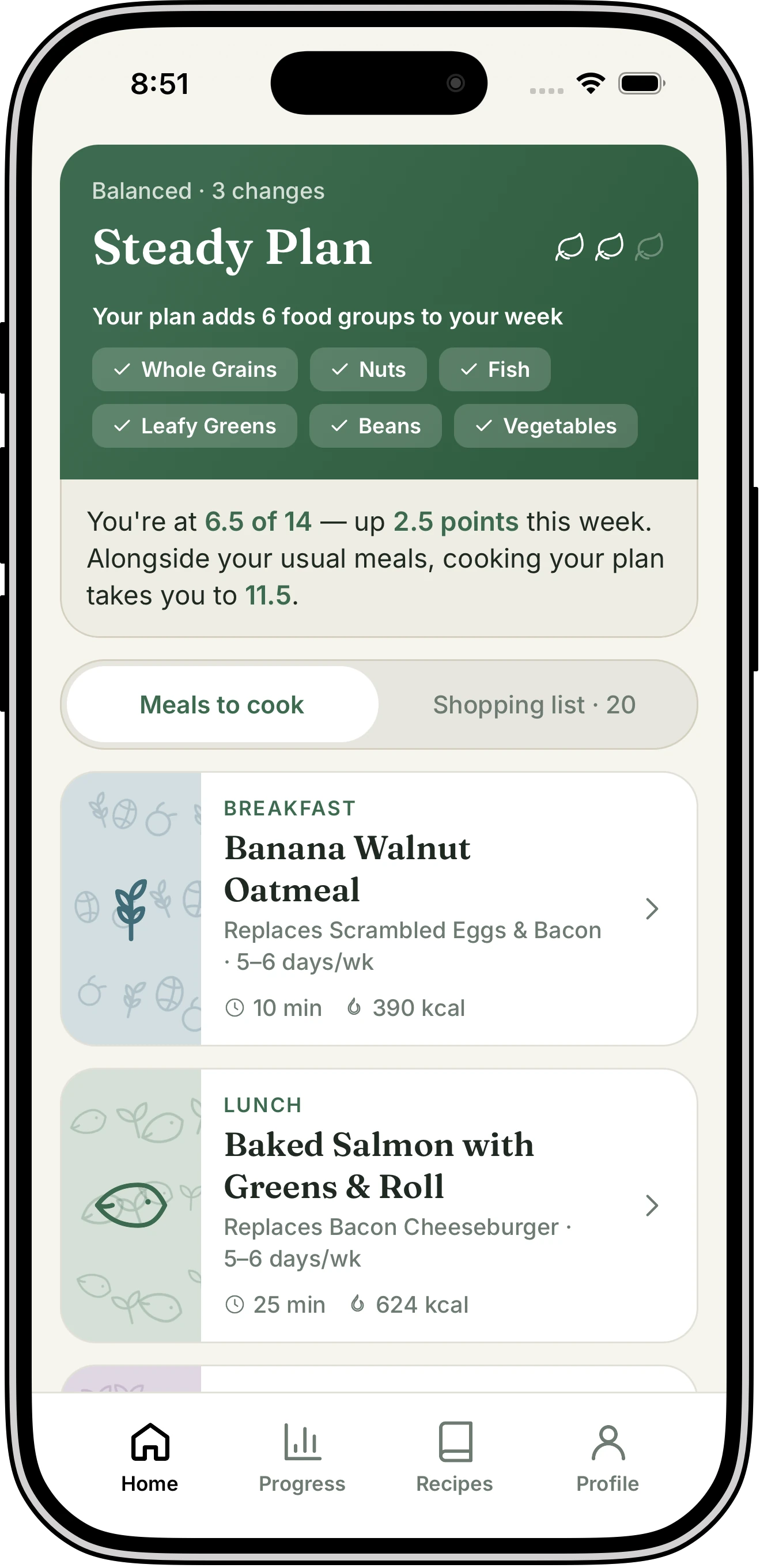
The short version
The MIND diet — short for Mediterranean-DASH Intervention for Neurodegenerative Delay — was developed by nutritional epidemiologist Dr. Martha Clare Morris and colleagues as a hybrid of the Mediterranean and DASH diets. It emphasizes leafy greens, other vegetables, berries, nuts, beans, whole grains, olive oil, and fish, while keeping red meat, fried food, and sweets low.
Unlike diets defined by rules for a single day or a single plate, the MIND diet describes a weekly pattern: how often the encouraged foods show up in your week, and how rarely the limited ones do.
The evidence is mixed by study type. In observational studies, higher MIND diet scores have been associated with slower cognitive decline and lower dementia risk. In a three-year randomized trial, cognitive scores improved modestly in both groups, with no advantage for the MIND diet over a comparison diet — and analyses of that trial are ongoing.
The fourteen food groups
The MIND score counts fourteen food groups — nine encouraged, five limited:
- Green leafy vegetables spinach, kale, salad greens
- Other vegetables peppers, carrots, broccoli
- Berries blueberries, strawberries
- Nuts almonds, walnuts
- Beans lentils, chickpeas, legumes
- Whole grains oats, brown rice, whole-wheat bread
- Fish, not fried salmon, tuna, sardines
- Poultry, not fried chicken, turkey
- Olive oil as the primary cooking oil
- Red meat beef, pork, bacon, sausage
- Butter & margarine as a spread or in cooking
- Cheese cheddar, mozzarella, cream cheese
- Pastries & sweets cookies, cakes, ice cream, candy
- Fried & fast food french fries, fried chicken, takeout burgers
Each group scores 0, 0.5, or 1 point against a weekly cutoff from the original research, and the points sum to a total. The original 2015 score also included wine as a fifteenth component; Vittelio deliberately leaves it out and scores 0–14.
How Vittelio fits in
Vittelio turns the published scoring method into something you can use on your own week. You report the meals you already eat, it computes your MIND score from 0 to 14, and it suggests a few same-meal swaps — each with a step-by-step recipe and a weekly shopping list — at the pace you choose. Everything is computed on your device; there's no account and no tracking.